Field notes: the rooftop that looked perfect until we found the chiller
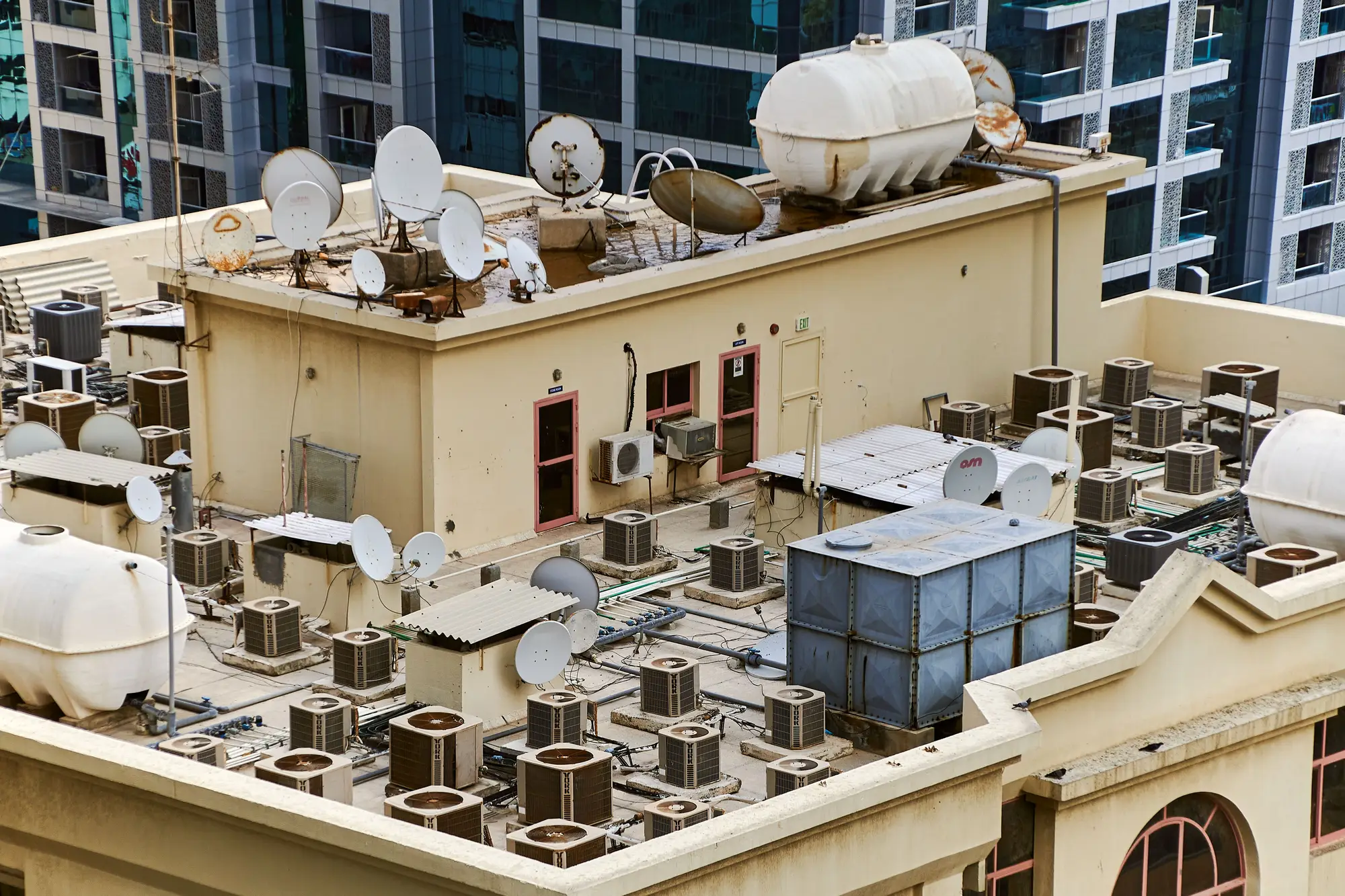
There's a particular kind of disappointment reserved for a roof that reads perfectly from above and then doesn't deliver when you're standing on it. Every site acquisition specialist has one of these in their back pocket. Mine involves a six-story office block, a basemap that looked clean as a whistle, and a chiller plant the size of a shipping container sitting dead center on the one flat stretch of roof we needed.
From the imagery we had, the building was a strong candidate. Good height for the search ring, flat parapet, no obvious obstructions, decent setback from the property line. The kind of rooftop you circle on a printout and hand to the field crew with a note that says "check this one first." So we did.
What the low-res basemap couldn't show us was the mechanical penthouse tucked behind the elevator bulkhead, the chiller unit bolted to a concrete pad right where the antenna array needed to go, and a second HVAC unit on the opposite corner that killed the line-of-sight we were counting on toward the next node. None of it showed up as a shadow or a shape worth flagging at that resolution. It just looked like roof.
The crew spent half a day up there with a tape measure and a level of patience I don't have, working out whether there was enough clear deck anywhere on that roof to make the lease worth signing. There wasn't, not without relocating two pieces of mechanical equipment that the building owner had no interest in moving for a tenant paying rooftop rent. We walked. That's a day of a surveyor's time, a day of scheduling, and a candidate that should've been crossed off a search ring before anyone got in a truck.
Mechanical clutter is the silent killer of usable roof area
Anyone who's spent time on commercial rooftops knows the pattern. Chillers, cooling towers, exhaust stacks, elevator overruns, skylights, solar arrays installed after the original roof survey. All of it eats into the clear deck space, and none of it reads clearly on standard satellite basemaps at the resolution most people are pulling candidate lists from. A rooftop that looks wide open at 2-meter GSD can be a maze of mechanical equipment up close, and the only way most teams find that out is the expensive way: boots on the roof.
That equipment casts real shadows, has real height, and sits in a fixed position every single time someone flies over it. Most teams simply aren't working from imagery sharp enough to resolve it. Pull imagery that can pick out a rooftop chiller unit against the roof deck, and the same structure that looked clean on a basemap starts telling you exactly where it isn't.
That's the gap between a candidate list built off a quick look at satellite imagery and one built off something that actually measures the roof. High-resolution imagery combined with 3D photogrammetry can pick out rooftop equipment, usable clear-deck area, and sightline obstructions well enough to tell you, before a crew drives out, whether a structure is worth the trip. It won't tell you what the building owner's lease terms look like. It will tell you whether there's room for a mast and a clean line of sight once you get there, which is the question that determines whether the site walk is worth scheduling.
I think about that chiller every time I see a "great candidate" circled on a low-res basemap with nothing else to go on. The roof always looks perfect from far enough away. Rooftop Site Selection exists for the part of the process where you find out whether it holds up, before someone spends a morning on a ladder finding out the hard way.
If your next search ring has a dozen rooftops that look good from orbit, it's worth knowing which ones have the clear deck to back it up.