Usable height vs. building height on a rooftop candidate
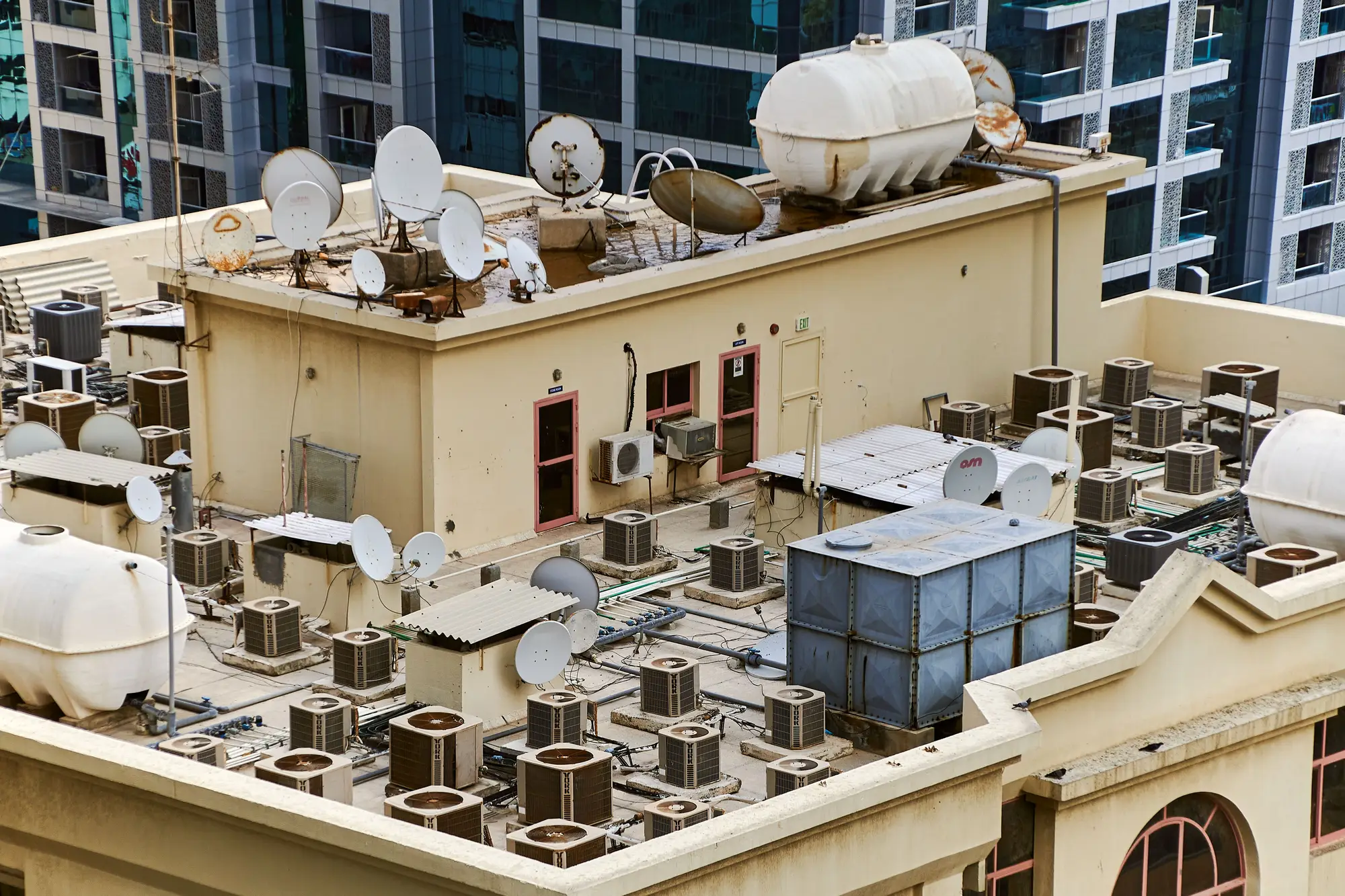
When a search ring comes back with twenty rooftop candidates, the height figure on the tax record or the building permit is the first thing everybody looks at, and it's also the number that misleads the most people on the team. Building height tells you how tall the structure is. It does not tell you how much of that height is available for an antenna.
Building height is a public record number
Building height, as most jurisdictions define it, runs from grade to the highest point of the roof, the parapet, or sometimes the roof deck depending on local code. It's the number a GIS layer or a county assessor's file will hand you without any extra work. For zoning purposes it's exactly the right number. For a rooftop candidate search, it's a starting point and nothing more.
The reason is simple: nobody mounts an antenna flush with the parapet and calls it done. Every rooftop site needs a mast, a standoff, or a platform to get the radiating element clear of the roofline, and whatever clears the roofline has to come out of something else: structural capacity, setback rules in the lease, sightline to the next hop, or just available real estate on a roof that's already crowded with HVAC curbs and a cooling tower.
What eats into usable height
Usable height is what's left once you subtract the stuff sitting on the roof and around it. A few of the usual suspects:
- Roof access and equipment. Penthouse bulkheads, elevator overruns, mechanical screens, and existing HVAC units all take up roof plan and, depending on where they sit, can block a mount location outright or force it to a corner with worse sightlines.
- Structural capacity for an additional mast. A building rated for its existing rooftop load doesn't automatically have headroom for a 15-foot pipe mast and three sectors. How tall that mast can run before a structural engineer has to sign off is a usable-height question, separate from what the building itself measures.
- Adjacent obstructions. A taller building, a water tank, or even a dense run of rooftop ductwork a few feet off your intended mount point can cut your line-of-sight clearance well before you hit the parapet edge.
- Jurisdictional and lease caps. Some municipalities cap total height including any rooftop appurtenance at a fixed number of feet over the roofline, independent of what the building itself measures. A rooftop MLA may also carry its own height restriction negotiated years earlier for a different tenant.
None of this shows up in a building height field. All of it shows up on a site walk, which is exactly why a candidate that looks great on paper sometimes gets crossed off after the crew drives out, climbs the stairs, and finds a mechanical penthouse sitting right where the mount was supposed to go.
Effective antenna height is the number RF cares about
Once you know usable height, there's still one more step before it means anything to a radio frequency engineer: effective antenna height, the mount's elevation above ground once the mast and any required standoff are factored in. This is the figure that actually drives coverage and interference calculations, and it's rarely just building height plus whatever mast you'd like to bolt on. It equals the building's height, plus the usable mast you can add, minus whatever obstructions sit in the sightline path to the next node.
This is the gap between eyeballing a satellite basemap and knowing which buildings in a search ring are worth a site walk. A rooftop that reads as the tallest structure on the map can turn out to have the least usable height on the roof once you account for the penthouse, the water tank, and a structural deck that won't take another pipe mast. A shorter building two blocks over, with a clean roof and a clear sightline, can beat it on every figure that matters.
Rooftop Site Selection runs that comparison before a crew ever drives out, using VHR imagery and 3D photogrammetry to flag usable mount area, roof clutter, and line-of-sight clearance for every rooftop in a search ring. Run your next ring through it before you schedule the walk.