What is a Fresnel zone and why it matters for rooftop screening
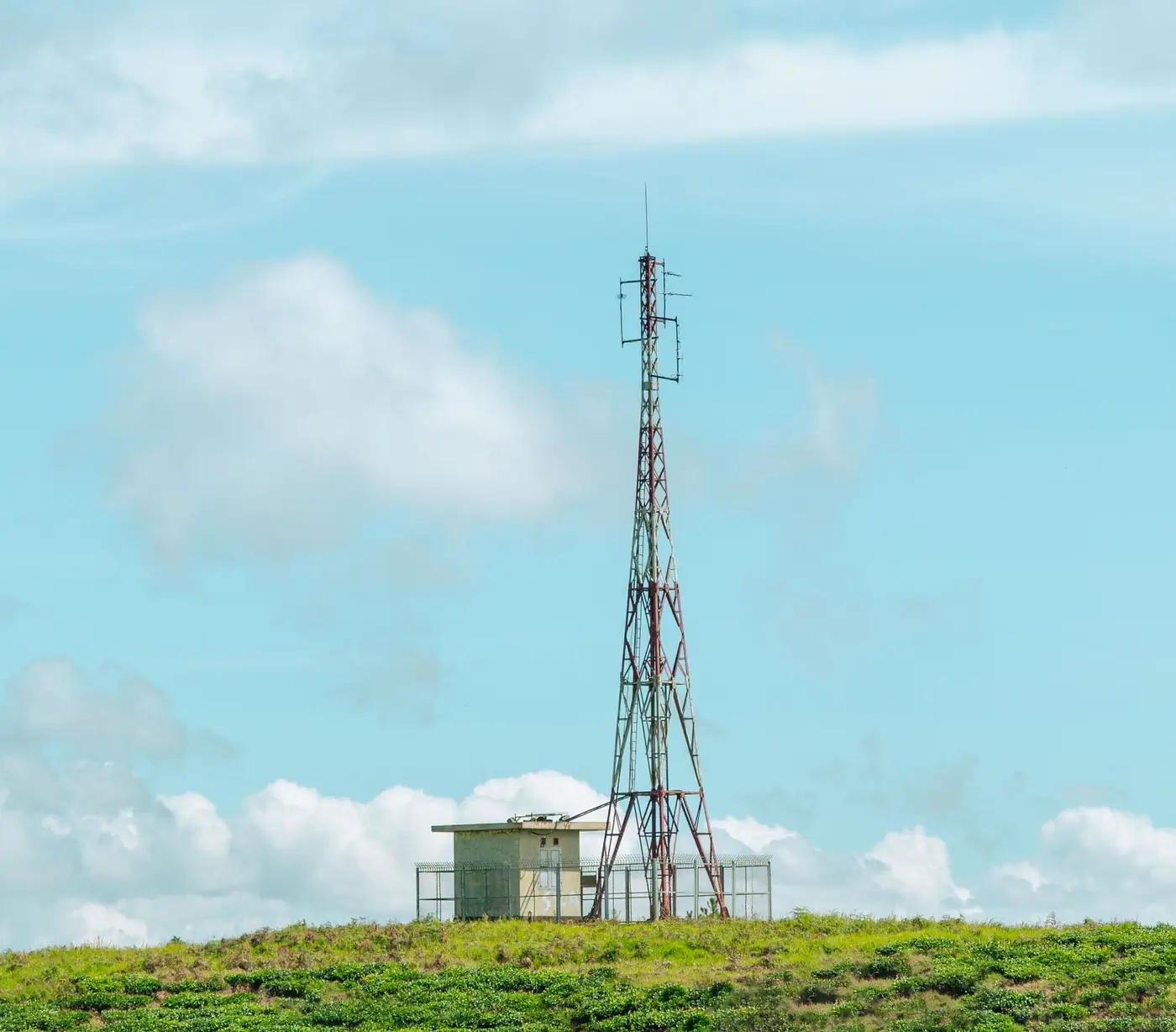
A Fresnel zone is the part of a radio link that doesn't show up on a satellite basemap, and it's usually the reason a rooftop that looked perfect on paper turns out to be unusable when the field crew gets up there.
Line of sight between two antennas starts as a straight line check: point A, point B, nothing in between, done. That's the first thing to check, but it's not the whole check. RF energy doesn't travel in a perfect pencil-thin beam. It spreads out around that straight line in a long ellipse, wider in the middle of the path than at either end. That ellipse is the first Fresnel zone.
Keep enough of it clear of obstructions, usually somewhere around 60% unobstructed by rule of thumb, and the link performs the way the design predicted. A parapet wall, a water tank, or a neighbor's roof access structure eating into that zone causes multipath fade, signal loss, or a link that works fine on a calm day and falls apart in certain weather.
Why a clear sightline on a map isn't the same as a clear Fresnel zone
This is where candidate screening goes wrong on a lot of desktop reviews. A reviewer pulls up a satellite basemap, draws a line from the proposed rooftop to the next node, and sees nothing crossing it. Looks clear. Gets added to the shortlist. Then the crew drives out, climbs up, and finds a rooftop HVAC unit sitting twelve feet off that straight line, close enough to the antenna that it's sitting inside the Fresnel ellipse even though it never touches the line itself.
That's the part a flat basemap can't show you. A top-down image tells you what's directly under the line. It doesn't tell you the height of the penthouse structure forty feet past the roof edge, or whether the adjacent building's rooftop equipment pokes up into the zone from the side. You need the third dimension: actual structure heights, actual roof clutter, actual elevation of everything within reach of that ellipse, not just whatever sits exactly on the bearing line.
What actually needs checking before the site walk
A real clearance check for a rooftop candidate looks at a few things together:
- The height of the host structure itself, including parapet, screen walls, and any rooftop additions that raise the effective mounting point
- Roof access: is there a path to the mounting location that doesn't require a crane, and is the roof rated for the gear
- Everything within the Fresnel ellipse along the proposed path, not just what's on the centerline, including adjacent rooftops and anything tall enough to intrude from the side
- The mast or mount height needed to clear all of the above with margin, calculated from actual structure heights rather than the straight-line distance alone
That last point is where a lot of candidates fail the clearance check once the ellipse width gets added in, even after clearing the straight-line test. A structure can be tall enough to clear a straight line to the next node and still come up short once you add the Fresnel ellipse's width at midpath. The site needs more usable height than the raw line-of-sight number suggests, and that's easy to miss when you're working off a 2D image.
Screening this from imagery instead of a site walk
Photogrammetry built from very-high-resolution imagery, under half a meter GSD, gives you structure heights and roof-level detail for every candidate in a search ring without sending anyone up a ladder first. Run against a proposed path, that height and obstruction data flags which rooftops have the usable height and clearance to actually work, and which ones only looked workable because the basemap didn't show the rooftop clutter sitting outside the centerline. Rooftop Site Selection turns that into a ranked candidate list with height and clearance figures attached to each structure, so the site walk goes to candidates that already cleared the Fresnel check on paper instead of ruling them out after a wasted trip.
If you're staring down a new search ring and don't want to find out about a rooftop HVAC unit the hard way, that's the problem this is built to catch before the crew leaves the office.